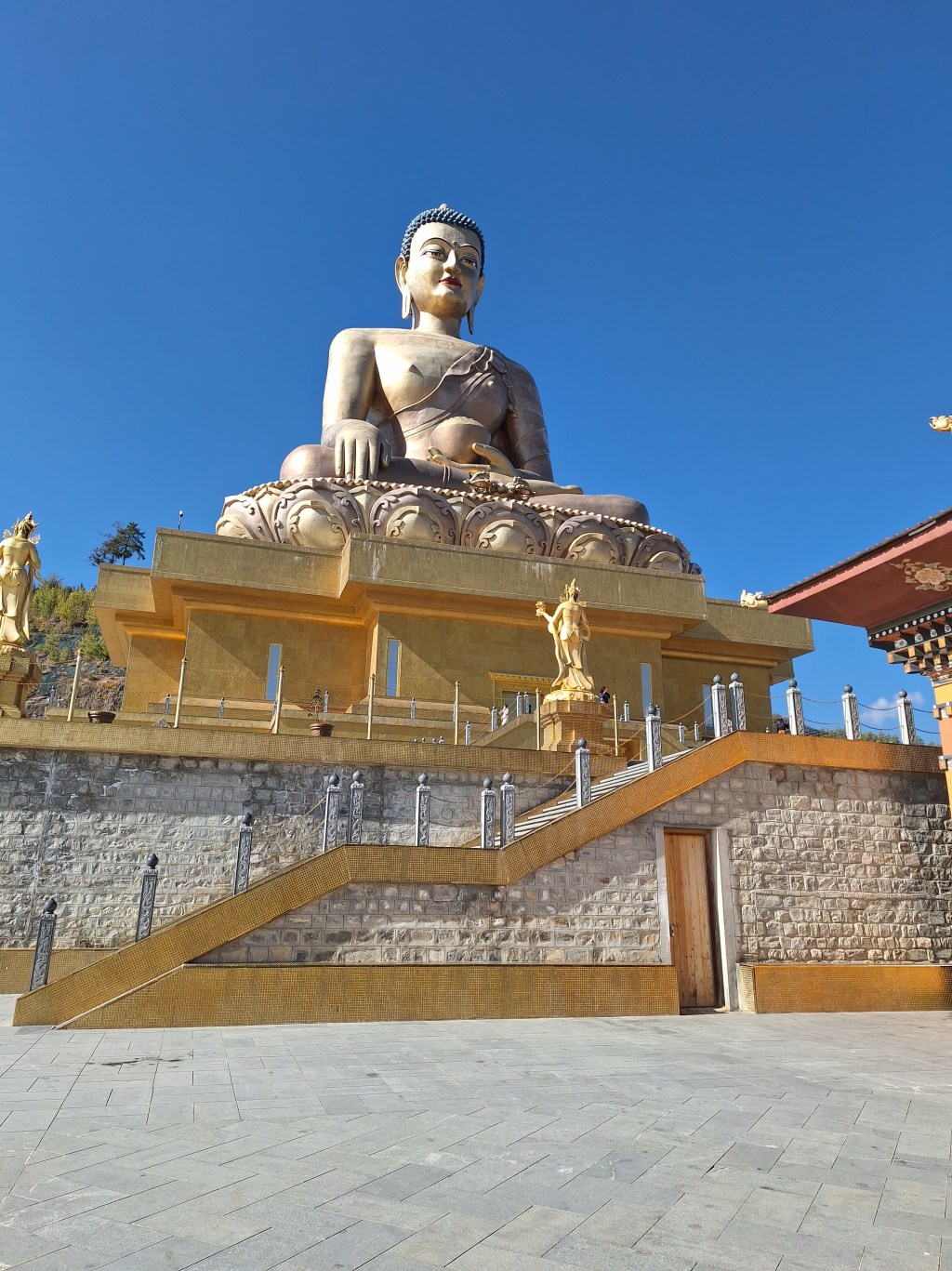
Bhutan has the timeless charm with its captivating landscapes and heritage sites. Phuentsholing is the gateway to Bhutan. Thimphu is the charming capital city to explore iconic landmarks, each offering a glimpse into Bhutan’s deep-rooted spirituality and culture. Discover the Paro’s treasures with visits to Dzongs, showcasing Bhutan’s exquisite art, architecture, and heritage. This crafted package offers a perfect blend of scenic landscapes, cultural immersion, and spiritual serenity, truly capturing the Essence of Bhutan. Embark on a journey to explore Bhutan’s rich cultural heritage.
(can be customized as per requirements / budgets) :
Bhutan itinerary for 5N/6D :
2N Thimpu + 2N Punakha + 2N Paro
Day 1: Arrival at Paro Airport – Thimpu
Arrive in Bhutan “happiest country in the world” at Paro airport
Immigration formalities upon landing at Paro, Bhutan (Can be done online 4 days before departure)
Transfer to Thimpu town for the check in
OR
Arrival at Bagdogra Airport – Thimpu
Transfer to the border town Pelling for immigration by walk
Visa formalities will be done with our representative and guide
Cross into Bhutan, Phuentsholing
Transfer to your boutique property in Thimpu for check in
Day 2: Thimpu sightseeing (any 5)
Breakfast at hotel
Simply Bhutan Heritage Museum
Zorig Chusum – Arts & Crafts, Painting School (closed on Sat)
Jungshi Handmade factory
Buddha Dordernma – largest Buddha statue with views of Thimphu Valley
Tashichho Dzong – the “Fortress of the Glorious Religion” (Photostop)
National Memorial Chorten stupa
Motithang Takin Preserve Zoo
Drubthob Goema/ Zilukha Nunnery / Anim Dratshang (Nunnery) / Thangthong Dewachen Nunnery
National Textile Museum (closed on Sat)
*Optional – Lunch at Babesa Village Restaurant
Beer tasting session at a local brewery on your own
Return back to your hotel for the overnight stay
Day 3: Thimpu – Punakha via Dochula Pass
(Punakha can be a day tour as well from Thimpu)
Checkout after breakfast, proceed to Punakha
Dochula Pass
Chimi Lakhang Temple
Suspension bridge
Punakha Dzong (viewpoint)
Day 4: Optional Day: Day tour to Pobjika (Gangtey)
Breakfast at hotel
Black Necked Crane centre
Gangtey Gompa
Return back to Punakha
Day 5: Punakha/Wangdue – Paro + Sightseeing
Royal Botanical Garden
Takthang monastery / Tiger’s Nest viewpoint
Rinpung Dzong “Fortress of heap of Jewels”
Ta Dzong or Tamchog Lhakhang
National Museum
Check into hotel for overnight stay
*Optional: Hike to Tiger’s Nest + traditional hot stone bath
Cultural immersion: dress in Bhutanese national dress for photographs
PS: Paro market is good for shopping and filled with restaurants.
DAY 6: Optional Day: Paro – Haa Valley & Chele La Pass
Savor the delicious breakfast
Transfer to Haa Valley (2.5 hrs)
Chele la pass (1 hr) – highest motorable road pass, views of sacred Mt. Jhomolari
Optional stay in village of Phintso Norbu Katso in Haa Valley
DAY 7: Leave for airport for flight back home
Package Cost (without flights) :
Budget Travel: INR 45,000 per person (Min 2 pax)
Luxury Travel: INR 80,000 per person (Min 2 pax)
Inclusions: Airport transfers, accommodation with breakfast, sightseeing in a private car
Exclusions: Optional activities are paid activities, Entrance fee or tickets,
Domestic/ International flights, Visa fees, expenses of personal nature
All packages are customizable. Any changes can be done as per the interest of the traveler before the payment of the tour.
Order of the itinerary may change
Cost may vary as per the hotels of any choice
Below costs are approx costs of the package.
______________________________________________________________
______________________________________________________________
IMPORTANT INFO
______________________________________________________________
______________________________________________________________
VISA for Indians:
Requirements: Valid Indian passport with at least 6 months validity or valid Voter’s
ID card for Indian citizens.
Process: Indian tourists do not require a visa but obtain an entry permit upon arrival at Paro International Airport or at the land border crossings like Phuentsholing.
Permitted documents: Valid Indian passport/Valid Voter’s ID Card, 2 Passport-sized photographs, Itinerary details (if available) (and copies of all documents)
________________________________________________________________
Places to Stay:
Thimpu: Lemon Tree Resort Hotel – Deluxe Room
Paro: Shomo Chuki Resort – Superior Deluxe Room
5 Star stays:
Thimpu: Druk Hotel
Punakha: Lobesa Boutique Hotel
Paro: Kaachi Grand Resort
—————————————————————————————————————–
Key Geographical Regions in Bhutan:
Bhutan is divided into four main geographical regions—Western, Central, Eastern, and Southern—comprising 20 districts (Dzongkhags)
– Western Bhutan (Paro, Thimphu, Haa, Punakha, Wangdue Phodrang):
Thimphu: The capital city, featuring the Tashichho Dzong, Buddha Dordenma, and bustling markets.
Paro: Valley with the iconic Tiger’s Nest Monastery (Taktsang) and the National Museum of Bhutan.
Punakha: Known for the Punakha Dzong situated at the confluence of two rivers.
Haa Valley: A serene, less-visited area known for trekking and traditional culture.
– Central Bhutan (Bumthang, Trongsa):
Bumthang: Known as the “spiritual heartland,” consisting of four valleys, ancient monasteries, and Jakar Dzong.
Trongsa: Referred to as the “Balcony of Bhutan,” featuring a massive, historically significant fortress.
– Southern and Eastern Bhutan:
Phobjikha Valley/Gangtey: A scenic glacial valley, famous for the Gangtey Monastery and wintering black-necked cranes.
Lhuentse: Ancestral home of the royal family, known for weaving.
Samdrup Jongkhar/Gelephu/Phuntsholing: Major border towns in the south connecting to India
______________________________________________________________
Things to eat in Bhutan:
In Bhutan, vegetarians will not be disappointed. There are rice, noodles, datshi (cheese based dish) etc.
* Diff types of Datshi (Cheese based dish) – Ema Datshi/ Kewa (potato) / Shamu (mushrooms) / Shakam (sun dried beef or meat)
* Rice – Red, White, Brown
* Ting Momos: Steamed bread like a rolled cinnamon bun but not sweet
* Hoentay: Dumplings filled with cheese and served in a broth or gravy
* Puta: Buckwheat noodles, often served with a spicy sauce
* Khuli: Buckwheat pancakes, served with chili sauces or as a side
* Jaju: A soup made from dried algae or river weed
* Ara (or Arag): traditional alcoholic beverage in Bhutan
* Suja (Butter Tea): A traditional drink made with tea, butter, and salt
* Fried Turnip Leaves: simple dish made from turnip leaves
Phobjika: buckwheat pancakes (Khuli), Yak butter tea, and buckwheat noodles (puta)
Hoentey Tasting: Try this specialized local buckwheat dumpling filled with turnip leaves, cheese, and spices, unique to the Haa region.
_____________________________________________________________
Things to buy in Bhutan:
Apparels and jewellery – jackets, traditional Kira
Jasmine tea
Gouda Cheese or local cheese
Solid perfume in wooden box
Meditational flags
Local paintings, Cups, traditional masks, Buddhist Sculptures
Cane, Bamboo, beads products
Paper crafts from Jungshi Handmade Paper Factory
Handmade Handbags
*Do not buy antique handicraft as you cant take antique items out of country
Note: In Bhutan, cover your head, shoulders, and upper arms. Women who wish to dress modern must consider skirts, dresses, or pants till below the knees
_______________________________________________________________
What to pack for Bhutan:
Some local currency for immediate needs
Emergency contact information
Travel Items: Travel locks, Ziplock bags, universal travel adapter, Portable charger/power bank, Insect repellent
Optional: Waterproof phone pouch, Modest clothing for religious places covering shoulders & knees, Reusable water bottle, Rain Coat or Umbrella, Small flashlight/ headlamp, Travel towel / Wet wipes, Small notebook and pen, Eye mask and earplugs, Collapsible shopping bag, Lightweight daypack
Health & Personal Care: Medications for Motion sickness,, Basic first-aid kit
Personal toiletries, Tooth Brush & Paste, Hand sanitizer or wipes, Lip balm with SPF, Sun hat, Sunglasses (UV protection), Sunscreen (high SPF)
Clothing & Footwear: UG and socks, Sleepwear
Winters: Heavy woolen for evenings, Thermals, warm jacket
Gloves, warm cap, muffler
Summer Wear: Hat, Comfortable sandals/flip-flops / Sneakers/ walking shoes
(especially for exploring historical sites), Lightweight jacket (for cooler evenings
in hill country)
Tentative Daily schedule of a monk living in Bhutan:
1. Wake up by 5.30 AM
2. Morning prayer chants for 1.5 hours
3. Breakfast for 30 mins
4. Buddhism studies until 11.30 AM
5. Lunch break for 1.5 hours – some of them will take the time to nap
6. Afternoon classes such as English, IT or astrology
7. Evening prayer chants at 6 PM for an hour
8. Dinner for 30 mins
9. Evening classes, probably Buddhism studies too
10. Day ends by 9 PM
 One Sky Voyage Travel
Leave a comment